诡域新娘
Chinese scientists develop electrode coating to address signal loss and tissue adhesion problems in long-term brain-computer interface implantation_我的网站

A |
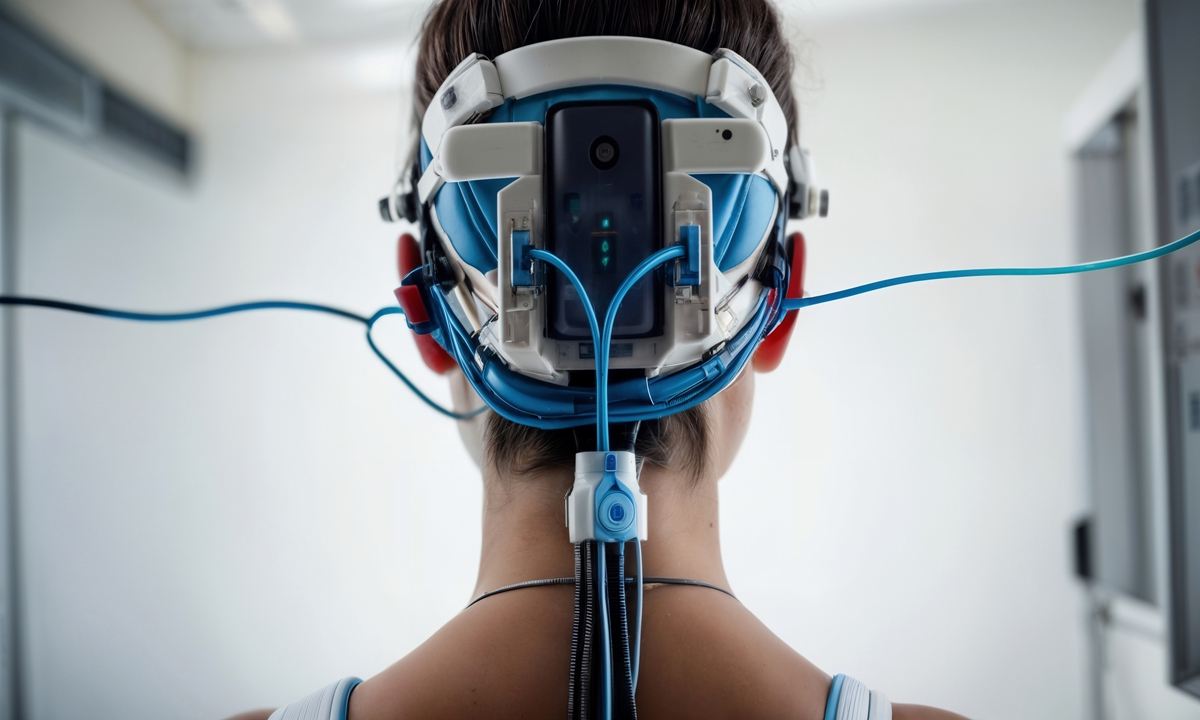
Chinese researchers have developed a multifunctional electrode coating that addresses key challenges in long-term brain-computer interface (BCI) implantation, including signal loss and tissue adhesion, bringing BCI one step closer to clinical application, the Global Times learned from the research team behind the findings on Sunday.
As an emerging field combining neuroscience and artificial intelligence (AI), BCI faces a major challenge of ensuring long-term compatibility between electrodes and brain tissue. Previous clinical trials showed that immune responses could cause implanted electrodes to retract after just three months, severely reducing signal quality and the number of available channels.
This problem stems from chronic inflammation triggered by implants, which creates insulating scar tissue around electrodes and separates them from neurons. Irreversible adhesion between electrodes and brain tissue after long-term implantation also makes device removal risky, potentially causing brain injury during follow-up surgeries.
Experiments showed that flexible neural electrodes coated with this material could operate stably in the brain for more than 300 days and could be safely removed without causing damage. This means the universal coating technology can make electrodes not only operate stably over the long term but can also be safely removed and replaced after aging, paving the way for long-term BCI applications.
Developed by the research team led by Zhang Wei at the Technical Institute of Physics and Chemistry, Chinese Academy of Sciences, associated with Beijing Tiantan Hospital, Shanghai Institute of Microsystem and Information Technology and NeuroXess, a high-tech life science company specializing in BCI technologies, the cationic alternating peptide electrode coating preserves electrode flexibility and conductivity, while offering antibacterial, anti-protein adsorption and immune-rejection-inhibiting functions.
A 300-day animal study showed the coating's effectiveness. Bare electrodes experienced a sharp loss of recording capability after 90 days of implantation and could barely detect neuronal signals after 300 days. In contrast, coated electrodes maintained stable recording channels and consistently captured neural signals above 155 microvolts.
In terms of neural modulation, after 300 days of implantation, conventional electrodes required a current of 100 microamps to induce weak limb responses, while coated electrodes triggered clear movements with only 2 microamps, improving modulation efficiency by 50 times.
Notably, the removal tests highlighted a key advantage of the coating that electrodes no longer form irreversible bonds with brain tissue. In the experiments, the coated electrodes were removed intact, with minimal damage to the surrounding brain tissue, Zhang told the Global Times on Sunday.
。 中新社重庆8月21日电 (张旭)重庆市住房和城乡建设委员会21日发布消息称,该委日前正式印发《重庆市城镇房屋安全保险工作指南(试行)》(下称指南)。这是中国首部专门针对城镇房屋安全保险的综合性工作指南。 针对不同类型房屋和风险场景,指南推出了房屋主体类、围护及设施设备类、公共安全责任类、施工类保险产品,基本实现城镇房屋安全风险全覆盖。 在理赔环节,指南明确了全流程规范:知悉事故后24小时内报案(不可抗力除外),保险机构24小时内赶赴现场查勘,同步开展应急施救、损失核定。5000元人民币及以下小额财产损失启用线上快赔通道,对于已明确属于保险责任的事故,被保险人线上完整提交资料、完成信息核验后,赔款24小时内到账。2025年2月8日,航拍重庆中心城区住宅楼群。(无人机照片) 中新社记者 何蓬磊 摄 值得关注的是先行赔付制度:出现人员伤亡、房屋倒塌危及公共安全等紧急情形时,保险机构应先行支付不低于预估赔偿金额50%的资金,用于应急救援、受灾居民临时安置和紧急排险。 指南的一大亮点是强化保险机构的“风险减量服务”功能。保险机构须按实际收取保费的20%左右专项用于房屋安全风险防范、事故预防相关工作。该项工作实行单独立项、单独核算。 重庆市住房和城乡建设委员会表示,重庆城镇化正从快速增长期转向稳定发展期,城镇房屋“老龄化”问题日益凸显。指南将为房屋安全构建起“事前预防、事中管控、事后赔付”的全链条风险防控体系。
Current article:http://j7o.pisezuibanzoukou.cyou/38cn/20260826/472397.html
Published on:07:10:11